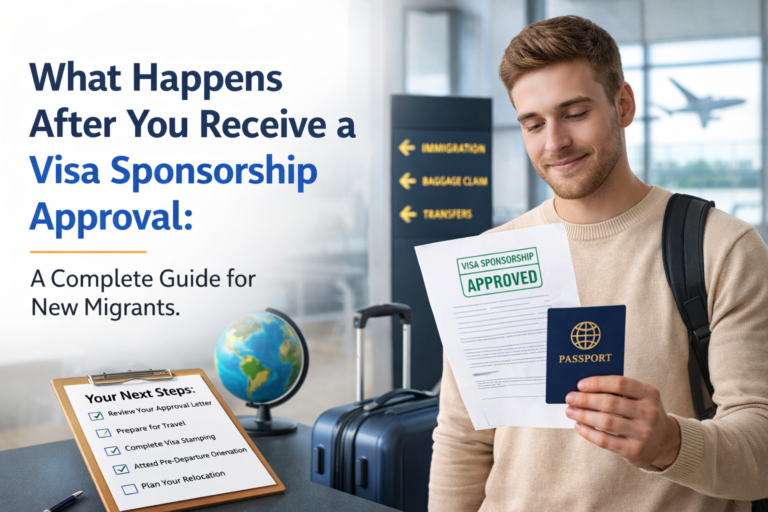
Introduction
Applying for a sponsored job abroad can feel overwhelming, especially for first-time applicants. Many people know what they want—relocation, stable income, and legal work—but they don’t understand how the process actually works from start to finish.
This article explains the full step-by-step process of applying for a sponsored job abroad, from the moment you start searching for opportunities to the day you arrive in your destination country. The goal is to give you clarity, reduce mistakes, and help you prepare realistically.
While procedures vary by country and visa type, most sponsorship processes follow a similar structure worldwide.
Step 1: Understand the Type of Sponsorship You Need
Before applying, you must understand which visa category fits your situation.
Some visas are:
-
Seasonal or temporary
-
Employer-specific
-
Long-term or permanent
Each category has different rules, timelines, and requirements. Applying for the wrong visa type can result in rejection even if you have a job offer.
Research government immigration websites to confirm eligibility.
Step 2: Identify Legitimate Sponsoring Employers
Not every employer can sponsor foreign workers.
Legitimate sponsors usually:
-
Are registered businesses
-
Hold government sponsorship licenses
-
Advertise roles clearly
-
Follow official recruitment processes
Focus on:
Avoid offers that cannot be verified independently.
Step 3: Prepare a Clear and Honest Application
Your application should be simple, accurate, and honest.
This includes:
Avoid exaggeration. Immigration authorities cross-check information during visa processing.
Step 4: Submit Applications Early
Many sponsorship visas operate under quotas or seasonal limits.
Submitting early:
Late applications are often rejected due to capacity limits.
Step 5: Attend Employer Interviews
Most employers conduct interviews before offering sponsorship.
Interviews may be:
-
Video calls
-
Phone interviews
-
Online assessments
Employers focus on:
You do not need perfect language skills—clarity and honesty matter more.
Step 6: Receive a Conditional Job Offer
If selected, the employer issues a job offer or conditional contract.
This document usually states:
The offer does not mean relocation yet. It begins the visa process.
Step 7: Employer Initiates Sponsorship Paperwork
The employer submits sponsorship paperwork to immigration authorities.
This may include:
-
Labor market approvals
-
Work permit applications
-
Sponsorship certificates
Processing times vary by country.
Step 8: Gather and Submit Personal Documents
While the employer handles sponsorship, you must submit personal documents.
These often include:
-
Passport
-
Police clearance
-
Medical exam
-
Educational certificates
-
Photos
Submitting documents promptly prevents delays.
Step 9: Attend Embassy or Consulate Appointment
Most visas require an embassy appointment.
You may be asked about:
Answer honestly and clearly.
Step 10: Wait for Visa Decision
Visa processing can take weeks or months.
Delays may occur due to:
-
Background checks
-
Medical verification
-
High application volume
Avoid making travel plans before approval.
Step 11: Receive Visa Approval and Travel Instructions
Once approved, you receive:
Review visa conditions carefully.
Step 12: Prepare for Travel and Arrival
Before traveling:
Employers often assist with arrival orientation.
Step 13: Register After Arrival
Many countries require:
Missing registration deadlines can cause legal issues.
Step 14: Begin Work and Follow Visa Conditions
Once employed:
Violating visa rules can lead to cancellation.
Step 15: Explore Long-Term Options (If Available)
Some visas allow:
-
Extensions
-
Employer changes
-
Residency applications
Understanding long-term pathways helps with planning.
Common Mistakes Applicants Make
Avoid these mistakes:
Preparation reduces risk.
Why Process-Focused Content Matters
Clear process guides:
-
Reduce misinformation
-
Protect applicants
-
Increase site authority
Search engines reward transparency.
Final Thoughts
Applying for a sponsored job abroad is a structured legal process, not a shortcut. Success comes from preparation, patience, and understanding each step.
Knowing the process protects you from scams and increases your chances of approval.